Friday, 21 May 2010

Final Tail


Last of the white-tailed tropicbird images to be posted... promise!

Next up... some of the birds around the resort.

Thursday, 20 May 2010

Black River Echo

Our base in Mauritius was in the Bel Ombre area, located in the south-west of the island and close to the last native forested areas of Black River Gorges National Park.

The park extends over 6,754 hectares, covering about 2% of the island’s area and holds 9 species of birds, which are found only in Mauritius. So that was enough incentive to explore the area!


Armed with some of Charlie Moores trip details from a few years back we headed to the Le Petrin visitor centre and took an easy walk along the Macchabee forest ridge. Many of the introduced bird species were seen frequently along the trail including red-whiskered bulbul and rose-ringed parakeet. It was however another parakeet species that was of more interest...


It was a really hot day but the views enabled us to forget the sweat dripping...! The gorge was exceptionally deep and their were some wonderful views of waterfalls.


Above - failing miserably to photograph Mascarene Swiftlet...

In the gorge white-tailed tropicbird dominated and were a pleasure to watch, their tails were amazing!


Nearing the Macchabee viewpoint were finally heard the deep croaking call of one of our target species, and a few seconds later a pair of the endangered endemic Mauritius echo parakeet flew past. Phew! The male bird is essentially similar to rose-ringed, with the deeper call being the most reliable distinguishing feature, while female birds have a conveniently all dark bill - see the record shots in this post.


Above - male Echo Parakeet
Below - Female Echo Parakeet


While we did not manage to see any Mauritius kestrel, a single Mauritius bulbul was seen (near the Black River Gorges Viewpoint), so it was a relatively successful visit... certainly recommended for the views alone.

Wednesday, 19 May 2010

Ile aux Aigrettes ~ few more...


Above - Madagascar Fody - abundant on Mauritius and more colourful than the native Mauritius endemic
Below - Aldabran Giant Tortoise ~ 50 year old and 200kgs! Introduced on Ile aux Aigrettes to "naturally" graze the land. Replaced a native species that became extinct, but maintains the eco-balance.


Telfair Skink - only found un the wild on Round Island, introduced to Ile aux Aigrettes.

Tuesday, 18 May 2010

Mauritius: Ile aux Aigrettes


Prior to the trip to Mauritius I was fortunate to have stumbled over Charlie Moores wonderful tale describing his visit to Ile aux Aigrettes, a tiny island off the south-east coast of Mauritius. This island has been utilised by the Mauritius Wildlife Foundation to re-establish some of the areas most threatened bird species.

We booked a visit upon arrival on Mauritius, and the mention that one of the party (me!) was a birder secured us a private tour with a warden who specialised in the bird species present.

Our landing on the island was greeted with the first of many Mauritius Fody - a cracking start! This species was introduced to the island in 2003 and now supports a population of over 100 birds. Considering that the MWF website states:

 "The Fody is the rarest endemic bird of Mauritius with 100-125 pairs remaining and is considered Critically Endangered by the International Union for Conservation of Nature (IUCN). In 2002 MWF began a recovery project to rescue nests from the wild, hand-rear the offspring and release them onto Ile aux Aigrettes, a predator-free offshore island under the conservation management of MWF. This project has been very successful and today there are around 100 birds on Ile aux Aigrettes, the result of releases and offspring produced by the latter".

- So Ile aux Aigrettes is possibly the best place to encounter this species.


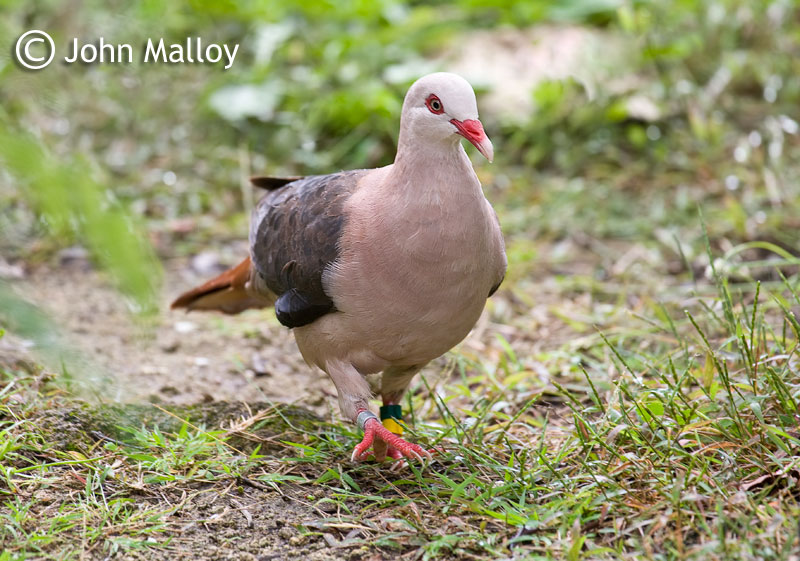
Mauritius Pink pigeon now numbers an entire population of 320 birds, a pleasing rise from the population of 12 in 1986...


I had visions of many photo opportunities with pink pigeon, but alas it was not to be - our initial bird, an immature teased us from a viewing platform, while this adult greeted us on a heavily vegetated track - so record shots were only achieved before the bird lifted with nesting material. A stunning species nonetheless!! Pink pigeon is a very rare bird indeed, Birdlife International list the species as "endangered", while the MWF now cites 5 sub-populations on Mauritius.
The final endemic bird species seen took a little more effort - but thanks to the assistance of a second warden we finally connected with the critically endangered Mauritius olive white-eye....


... and what a tricky species this prove to be to photograph!


Two birds were present but very elusive. This species was only very recently introduced to the island and still maintains a very small breeding population. Birdlife International state that the current population is in the region of 190 - 296, with approx 36 on Ile aux Aigrettes.

An amazing morning...

Sunday, 16 May 2010

The Oriental Express

Spent an enjoyable day out with Phil of Crammy Birder fame in Lincolnshires' Frampton Marsh. Predictably this visit was a twitch for the oriental pratincole. It was positive news on the pager early morning, so our journey down was quite relaxed. Arriving at the reserve just after 10.00, we were watching this delightful pratincole soon after, as it hawked for insects over the fields.

Our initial viewpoint was from a track just beyond the 360 hide, and viewing proved to be distant. So we walked on, and what a good vantage point the east hide prove to be, as the pratincole hawked very close indeed!


 Above - Oriental Pratincole, Frampton Marsh RSPB. Click the image for a sharper version

There were lots of "oohs" and "aahs" as this eastern mega swooped very close to the assembled mass! Occasionally the pratincole would land (weirdly always in the same spot as it had left) and many digi-scopers are sure to have got some very decent images. It was in flight when photography was more of a challenge as this bird could really shift as it hawked! I've a load of "blurredpratincoleinsky" shots, some of which don't even have the "blurredpratincolein"...!!! However, I had a lucky flypast where a sequence were nearly in focus and (more importantly for me) the light was suffice so that you could see the smart plumage and colouration of this bird without too much need for photoshop editing. 

The oriental pratincole was a significant bird for me - it completes my UK set of pratincoles (those recorded so far anyway!) and it was my 400th UK tick. (!)

In addition to the pratincole there was some good birding to be had - wood sandpiper, little-ringed plover, garganey, corn bunting, little egret, three 1s little gull, dark-bellied brent geese were all nice padders, while we missed both temmink's stint and curlew sandpiper.

The journey back north was broken with a time-constrained visit to Potteric Carr. What a huge reserve! Arriving after 15.00, we had to be back to the car by 17.00 (note to self - don't park in the gated car park next time!). After paying for a permit Phil and I headed as quickly as we could to the St Catherine's field area of the reserve where we instantly could hear the very vocal iberian chiffchaff singing in trees on the M18 embankment. Cracking! Annoyingly we could not see the chiffie, though others could, albeit very briefly.

Time moved quickly and it was not long before we had to head back to the car - a shame for Phil - a tick so near but so far... There'll be others. And with that we headed back, arriving at 19.00, exactly 12 hours after we had started our day. Exhausted but well worth the effort!

Dinosaur


A busy week at work and a busy start to the weekend, with Dinosaur jr at Newcastle Academy.

Thursday, 13 May 2010

Dubai


Above - Red-wattled Lapwing, Safa Park, Dubai

As previously mentioned I recently returned from a short trip to UAE and Mauritius. Newcastle benefits from scheduled flights to Dubai with Emirates - so Dubai was a logical stop-off on the journey on 26th - 28th April. We stayed three nights south of the main city, although the first night does not really count as you arrive late. Day one was spent acclimatising round the hotel pool- temperatures were climbing to the forties...!


Above - view of the hotel on a day of leisure

Day two was more birdy, with a morning trip to Safa park. On arrival it was apparent that the park was rather vast, but luckily I met an ex-pat birder, so I was pointed in the "right" direction. Migrants were thin on the ground, with spotted flycatcher, redstart, yellow wagtail (5 grey-headed types and one assumed blue-headed) and one red-throated pipit.

The highlight for me was the number of hoopoe - tens! I've never seen so many, all feeding away on the newly cut lawns. frustratingly the only close birds kept to the shaded areas.


Red-vented and white-cheeked bulbul were common throughout the park while the boating pond in the middle held a couple of fine red-wattled lapwing (see top image) - stunners! Also on the boating pond were a single common sandpiper and an immature black-headed gull.

Further in the park is a fenced bird sanctuary area with limited viewing and access. This area was relatively quite, with little grebe, Egyptian goose, black-winged stilt, black-crowned night heron added. Purple sunbird were numerous but remained high in the canopy.


Above - Indian Roller - 3 - 4 present in Safa Park

Round the hotel Mynas' were represented by two species - common and pied - I rather like the pied! (see below). The only issue (for me) was that the security guards at the hotel did not like me wielding a camera around, so photo opportunities were limited - I was accosted as I went to take the image below!


Our room at the hotel was on the 18th floor. Pallid swift skimmed passed the tinted windows throughout the day and some limited sea watching provided two socotra cormorant, saunders tern and a single summer plumaged great black-headed (pallas's) gull. Indian silverbill bathed in the ornamental streams flowing through the gardens and the shrubs and palms were bustling with the tiny graceful prinia (see below).


So, a nice stop-over... on the morning of the 29th April it was back to the airport and onto Mauritius.

Tuesday, 11 May 2010

Mull


We arrived on Mull via the 07:30 from Oban - a journey that had started well with three otter in Oban harbour along with several dapper black guillemot and some crossbill. Our arrival at Craignure forty-five minutes later was equally as good, with another otter on the shore next to the harbour.

The main objective of Saturday was to get to Iona early - so we headed along the A849 to Fionnphort on what was a beautiful drive - cloudless skied, mirror-like water on the sea. Our progress was slowed somewhat by the amazing (by north-east England birders definition...) of great northern diver - a species that was to dominate our marine observations. There were many present, including some stunning summer pluage birds - see above! Also observed were many red-breasted merganser and eider.


While no eagles were seen in the morning, many buzzard were noted. As described in the previous post the main quarry on Iona was corncrake - and almost immediately upon arrival we could hear the crakes "crexing" - however it was three painful hours before two birds emerged - in a garden of all places!! A great tick for two of the group.

Back on Mull we headed back along Loch Scridain and joined the B8035 to travel in the direction of Knock. Our journey was slow and many stops were made to check the shores, cliffs and general stunning scenery as we drove. Highlight of the journey was meeting a familiar face from Northumberland - Bryan Raines, who "migrated" to Mull a few years back. Bryan will be familiar to many of the bird blog readers as he can be found here. It was great to catch up, and the mention of a pint later was suffice to give us a clear route back to our digs! Our meeting point was at the newly established "official" (there's a locked hide of sorts above the road) white-tailed eagle viewing point - and sure enough the female was sitting, albeit distant!

We continued our journey and it was not long before we bumped into another immature white-tailed eagle - and then another... Not quite as close as I'd like, but always impressive and a second tick of the day for cousin Rob!


We began our journey back to the digs (Bunessan: Argyll Arms - great accommodation and breakfast!!), not without another look at the eagle nest - male dropped in with the female, and a  very pleasant couple of pints with Bryan first at Pennyghael, which included a tame grey heron in the pub garden, eating dog food!


Sunset at Bunessan - Image by Rob Lawson

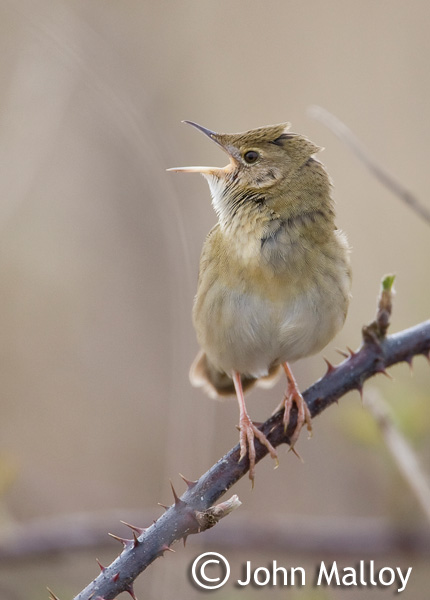
Sunday dawned a little more cloudy, but it was not without good birding - pre-breakfast included three rock dove feeding on the shore outside the hotel and a very showy grasshopper warbler on the road to Ardchiavaig.

Our drive back to Craignure after a very large Scottish breakfast featured decent birds including crossbill at Pennyghael, golden eagle and plenty of hooded crow. As with our arrival, our departure was met with another otter at Craignure!


We departed on the one o'clock ferry and left feeling rather sad that the trip was coming to an end - but all agreed it was a great success... a short trip with bird species seen high in the '70s, a couple of ticks for the group and a load of good banter and micky taking, endurance of the foul and ill effect of real ale too... roll on next year for our next venture!


Above - the "crew" - Mark, Rob, Me and John B

Monday, 10 May 2010

Crex Crex!

Friday 7th - Sunday 8th May 2010 was spent in the company of lifelong birding buddies Mark, John B and cousin Rob. We had chosen to spend time on Mull and Iona as part of a proposed 10 year birding project where each of us would meet somewhere as a group in the UK to attempt an entire "10 year trip" target of 200 species.

What a splendid choice Mull and Iona prove to be!


Saturday morning was spent on Iona, where after three hours two corncrake finally emerged from cover. Fantastic! I'd never heard corncrake calling before (having only seen a sorry-state bird on Scilly a few years back) and it was a magic experience - how a bird can be so close and remain completely hidden from view beat us all. In total a minimum of nine birds were heard/seen. And with a supporting cast of rock dove, hooded crow, sedge warbler and whinchat we were quite happy with our trip start.

More about Mull soon...

Friday, 7 May 2010

Tropic Tales...

A very quick post - back in UK from a rather pleasant trip to the Middle East and Mauritius. There will be more words and pictures from this trip soon... I'm heading to Mull & Iona this afternoon, where hopefully there will be some good birding to be had.

Here is a quick taster hot off the camera card: white-tailed tropicbird at Black River Gorges, Mauritius.

Monday, 26 April 2010

Pause

Heading on a short trip so there will be a brief pause in posting....

Wednesday, 21 April 2010

WAGtales

A text from Mark stating that he was able to head to Cresswell this afternoon was (again) too much of a temptation to resist... The black-headed wagtail was immediatley on view and it continues to be watched by a steady crowd of observers. Despite good light he never came as close as the other wagtails, so it was another black-less photo session. The other wagtails were more accomodating, with the "channel", white and yellow continuing to provide entertainment. Debate increases on which wagtail is the most appealing...

"Channel" Wagtail

White Wagtail

Yellow Wagtail

Click the images for a sharper version...

Punkbird


Another image from Sundays' session with grasshopper warbler at Arcot Pond. Fascinating birds...