Showing posts with label Pink Pigeon. Show all posts

Sunday, 26 December 2010

2010 - Review January - June


2010 has been an awfully quick year - here are a few of my highlights...

Above - African Penguins at Simonstown, South Africa during out New Year holiday to the Western Cape
Below - A UK tick - black-throated thrush, Newholm, North Yorkshire, January


February saw a visit to Cleveland for a very obliging ring-necked duck ~ the best and most close views I've had of the species in the UK. A great bacon sandwich was has had courtesy of CB afterwards!


March saw the arrival of a common crane at Eshott ~  a vocal bird and not popular with the territorial lapwing!

April was a month of wagtails - the possible black-headed at Cresswell was a stunner... even in the rain!


May was a busy month - the first week was spent abroad, with visits to Dubai and Mauritius.

The red-wattled lapwing was in Safa Park, Dubai - a park that had playing fields covered in hoopoe!


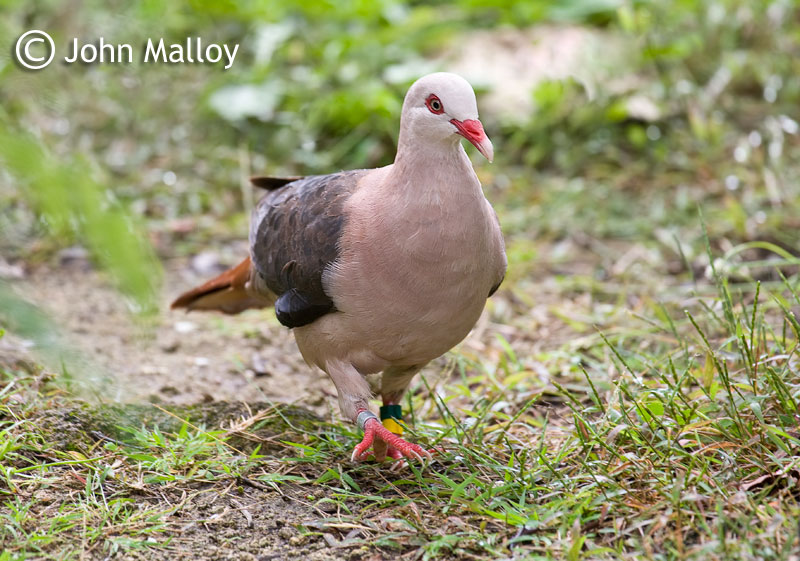
Mauritius was limited species-wise, we saw some really great birds ~ echo parakeet, Mauritius olive white-eye, white-tailed tropicbird.... but the enigmatic pink pigeon will never be forgotten...

May also saw the first of 10 planned annual birding weekends with the birders of my youth - Mark, John and Rob. 2010 saw us on Mull and Iona where corncrake was bird of the trip!


May produced another UK tick for me - oriental pratincole at Frampton Marsh. I saw this delightful bird with Phil on a sunny day-trip.


June was quieter than hoped-for, but a singing marsh warbler was nice...


The rest of 2010 will feature in the next post!

Saturday, 22 May 2010

Resort Birding


Most of the bird species around the resort in Mauritius were introduced and of standard holiday fare - common myna were very abundant and noisy, while the bold red-whiskered bulbul (right) came a close second.

A small stream near the resort entrance was checked a couple of times per day and produced most species, including village weaver, common waxbill, nutmeg mannikin, madagascar fody, spotted dove, zebra dove, madagascar turtle dove, yellow-eyed (also known as yellow fronted) canary and the familiar house sparrow.

Of more interest was the native species. In the resort this comprised of the most common endemic - Mauritius grey white-eye - an odd white-eye without a white eye / eye ring! Very tricky to photograph (see below), they had a knack of staying just within the foliage, obscuring a clear view! This species would often be found in small parties, typically 2 - 4 birds, and were generally very active.


Mascarene martin (below) were present, and appeared to be nesting at the hotel next door. I spent a morning waded out into a tidal channel trying to get some decent shots, but this species beat me! This species reminded me a little of purple martin...


Also available were the occasional striated heron (often feeding on the stream, most commonly on the shore-line), and an occasional fly-over white-tailed tropicbird.


Above - Yellow Eyed (Fronted) Canary
Below - Village Weaver


Late afternoons were spent checking out the sea ~ walks up and down the coast produce small numbers of whimbrel, while offshore there were good numbers of common noddy and a single sooty tern was logged.


Above - Common Waxbill

Mauritius is a fantastic place... it's certainly not a place to visit for high numbers of bird species, but in terms of endemics it has some real treats and this visit may have given me my only ever chance to see pink pigeon, echo parakeet, Mauritius olive white-eye... Combined with stunning scenary, the best fish I've every tasted (and Rhum I've drank!) and very friendly locals it comes highly recommended as a holiday destination.

Tuesday, 18 May 2010

Mauritius: Ile aux Aigrettes


Prior to the trip to Mauritius I was fortunate to have stumbled over Charlie Moores wonderful tale describing his visit to Ile aux Aigrettes, a tiny island off the south-east coast of Mauritius. This island has been utilised by the Mauritius Wildlife Foundation to re-establish some of the areas most threatened bird species.

We booked a visit upon arrival on Mauritius, and the mention that one of the party (me!) was a birder secured us a private tour with a warden who specialised in the bird species present.

Our landing on the island was greeted with the first of many Mauritius Fody - a cracking start! This species was introduced to the island in 2003 and now supports a population of over 100 birds. Considering that the MWF website states:

 "The Fody is the rarest endemic bird of Mauritius with 100-125 pairs remaining and is considered Critically Endangered by the International Union for Conservation of Nature (IUCN). In 2002 MWF began a recovery project to rescue nests from the wild, hand-rear the offspring and release them onto Ile aux Aigrettes, a predator-free offshore island under the conservation management of MWF. This project has been very successful and today there are around 100 birds on Ile aux Aigrettes, the result of releases and offspring produced by the latter".

- So Ile aux Aigrettes is possibly the best place to encounter this species.


Mauritius Pink pigeon now numbers an entire population of 320 birds, a pleasing rise from the population of 12 in 1986...


I had visions of many photo opportunities with pink pigeon, but alas it was not to be - our initial bird, an immature teased us from a viewing platform, while this adult greeted us on a heavily vegetated track - so record shots were only achieved before the bird lifted with nesting material. A stunning species nonetheless!! Pink pigeon is a very rare bird indeed, Birdlife International list the species as "endangered", while the MWF now cites 5 sub-populations on Mauritius.
The final endemic bird species seen took a little more effort - but thanks to the assistance of a second warden we finally connected with the critically endangered Mauritius olive white-eye....


... and what a tricky species this prove to be to photograph!


Two birds were present but very elusive. This species was only very recently introduced to the island and still maintains a very small breeding population. Birdlife International state that the current population is in the region of 190 - 296, with approx 36 on Ile aux Aigrettes.

An amazing morning...